
NSW Government Housing Pattern Book—Mid-Rise
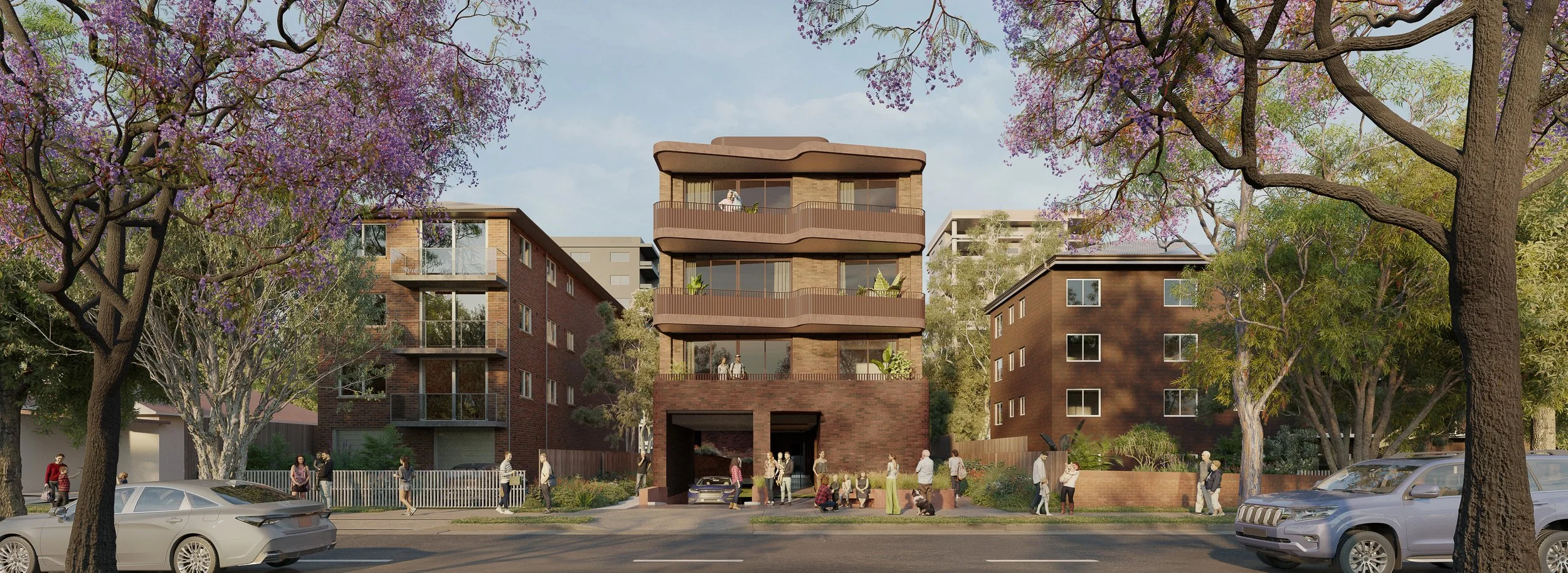
A sculptural, family-oriented apartment building featuring inviting shared spaces that foster connections between neighbours and the environment.
Fast tracking quality housing that belongs to Country. Nguluway DesignInc’s contribution to the NSW Housing Pattern Book is part of a state‑wide strategy to fast‑track the delivery of diverse housing infrastructure in response to the state’s urgent housing shortage. Developed to meet the quality and amenity benchmarks set by Government Architect NSW, this mid‑rise model ensures that speed never comes at the expense of liveability, sustainability, cultural integrity, and design quality.
Rooted in the Wiradjuri principle of yindiyamarra winhanganha — ‘respectfully knowing how to live well, in a life worth living in’ — the design draws on 73,000 years of First Nations knowledge. It prioritises relationships between people, and between people and nature, as the foundation of healthy, sustainable communities.
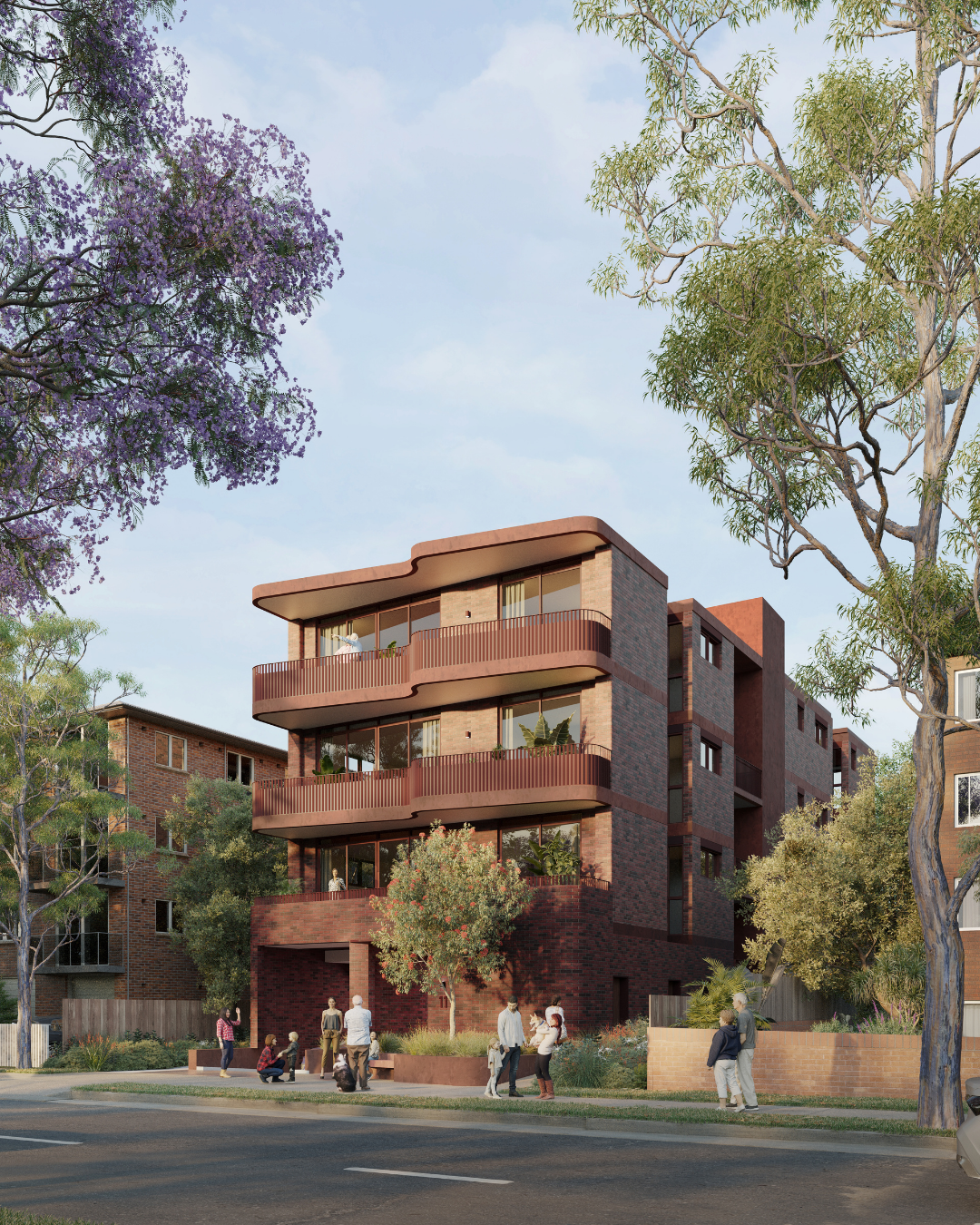
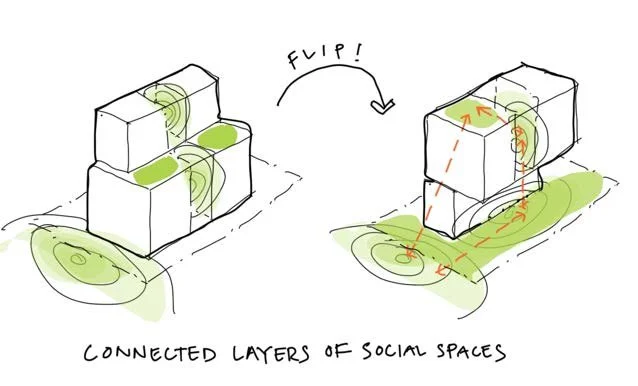
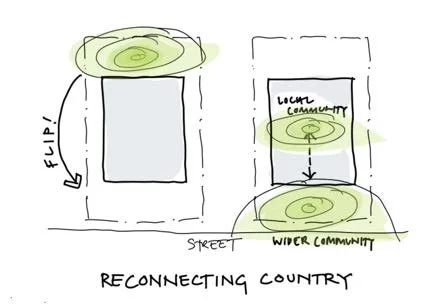
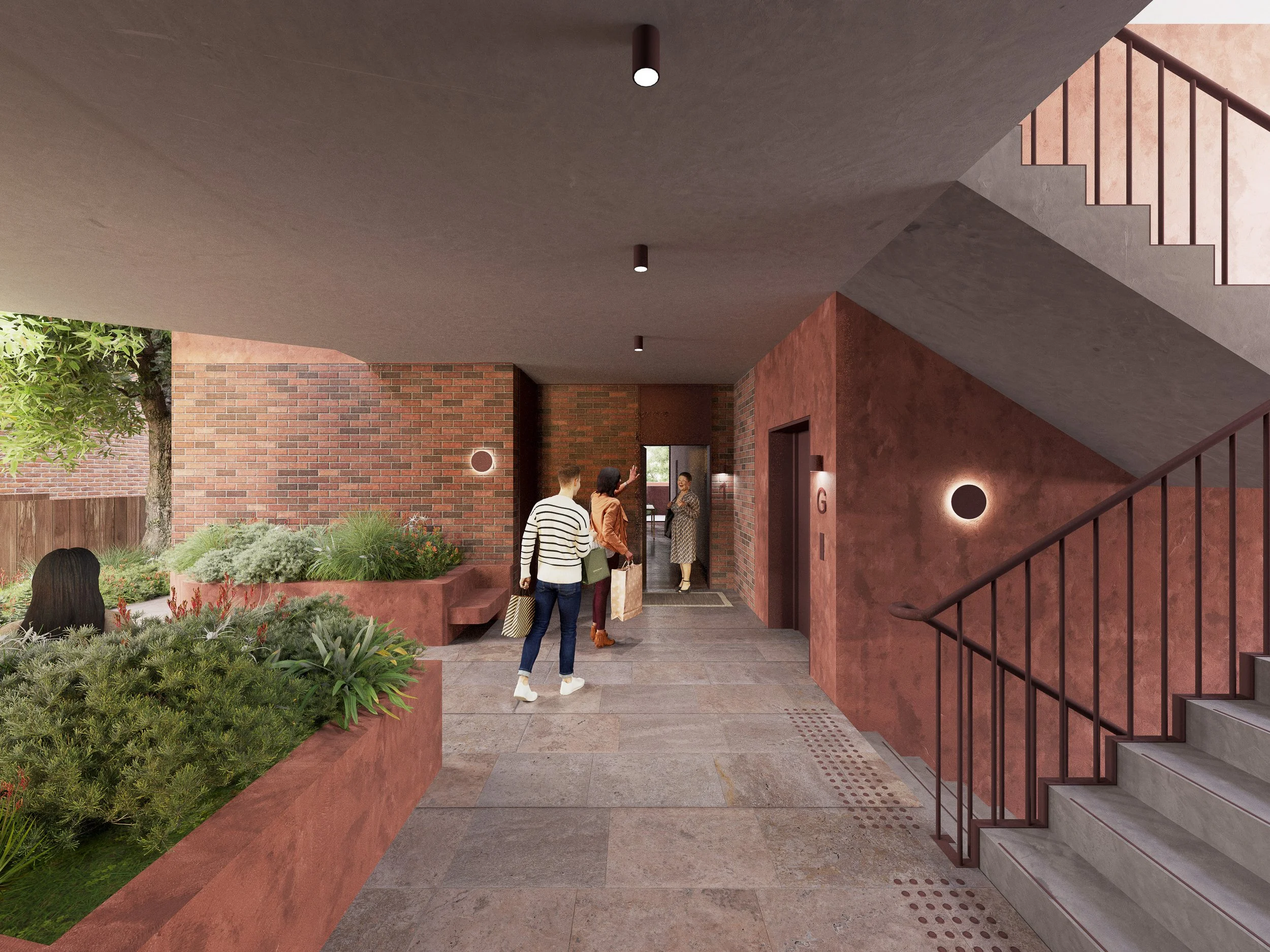
An old Dharawal story speaks of the meeting of Freshwater and Saltwater Country, and of the magic that unfolds in the meeting. This ‘brackish’ water is never the same; teeming with life, it moves, shifts, and transforms with each passing tide. It’s a natural place for gathering which sustains life. This ‘brackish’ space principle is a core theme of the Mid-Rise Pattern design, taking the form of communal areas for recreation, incidental meetings and gatherings of residents.
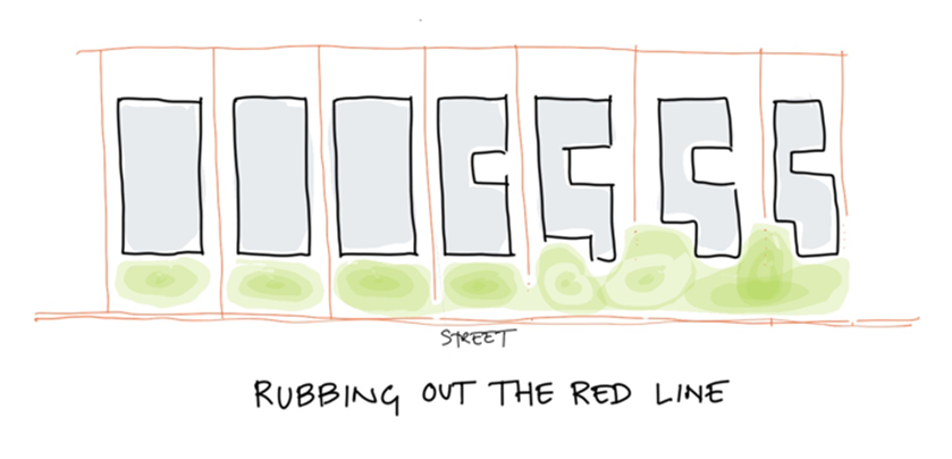
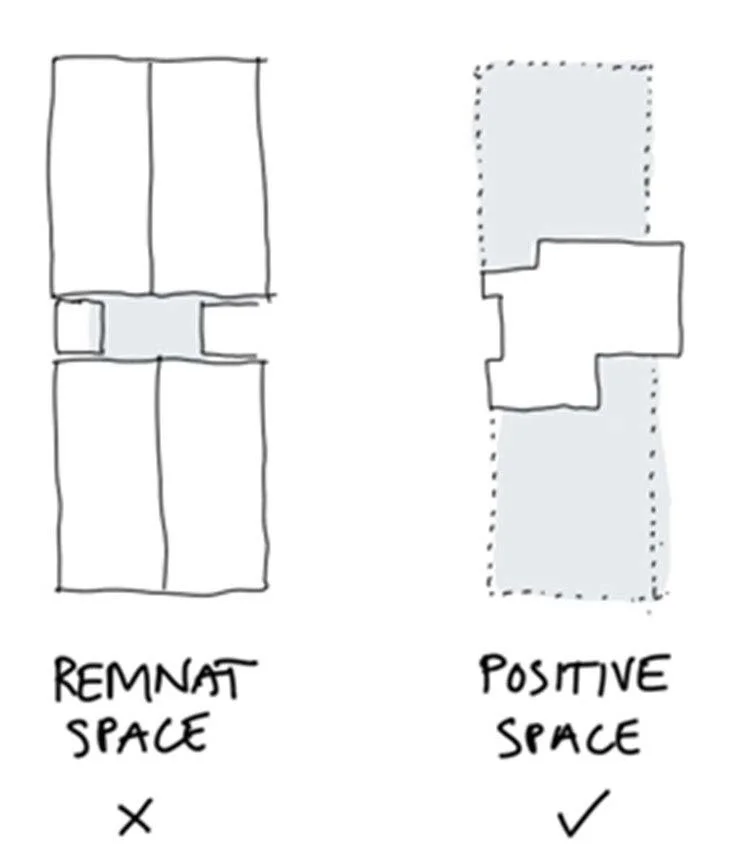
Beyond the brackish space, design ensures a ‘brackish fit’ whereby the building envelop blurs its boundary to neighbouring lots, the road and its surrounds and promotes healthy Country or a regenerated natural environment. Combined, the design presents as diverse, affordable and efficient housing where people want to live and gather.
Designing for connection
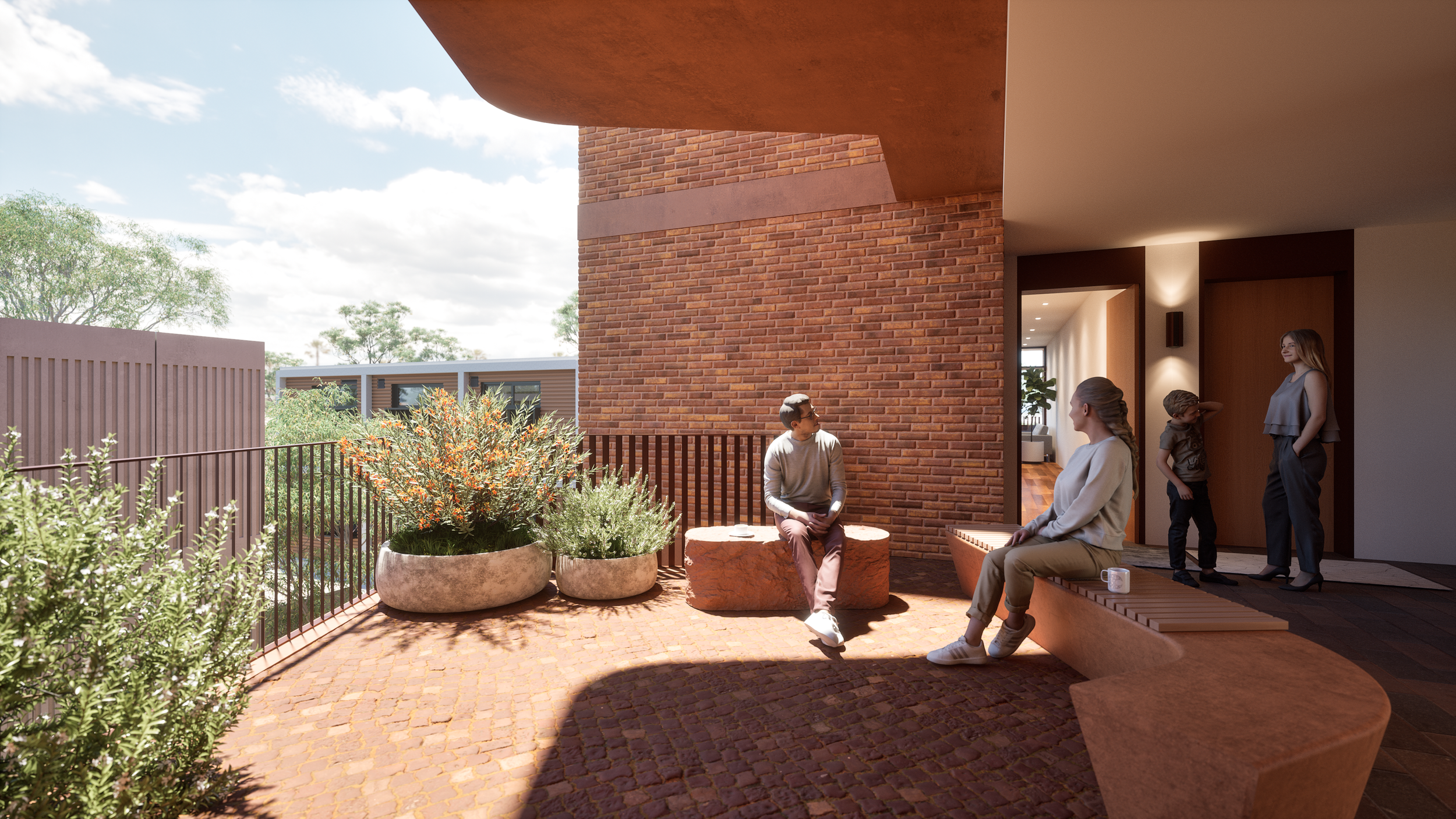
Inspired by Aunty’s House, the scheme champions ‘brackish spaces’ — in‑between thresholds like shared courtyards, verandas, and stairwells. These neutral zones belong to everyone and no one, inviting incidental encounters that counter isolation while respecting privacy. The ‘brackish fit’ approach blurs the boundary between building and landscape, encouraging healthy vegetation growth and regenerating the natural environment. Colours and materials reflect the local Country, supporting a circular economy.
Meeting the housing gap
Mid‑rise housing, at three to four storeys, offers a vital middle ground between detached homes and high‑rise apartments. It increases housing supply without overwhelming neighbourhood character and adapts to a variety of sites. By placing homes close to transport, shops, and services, the design supports walkable lifestyles, reduces living costs, and improves access to jobs and amenities.
Sustainability at the core
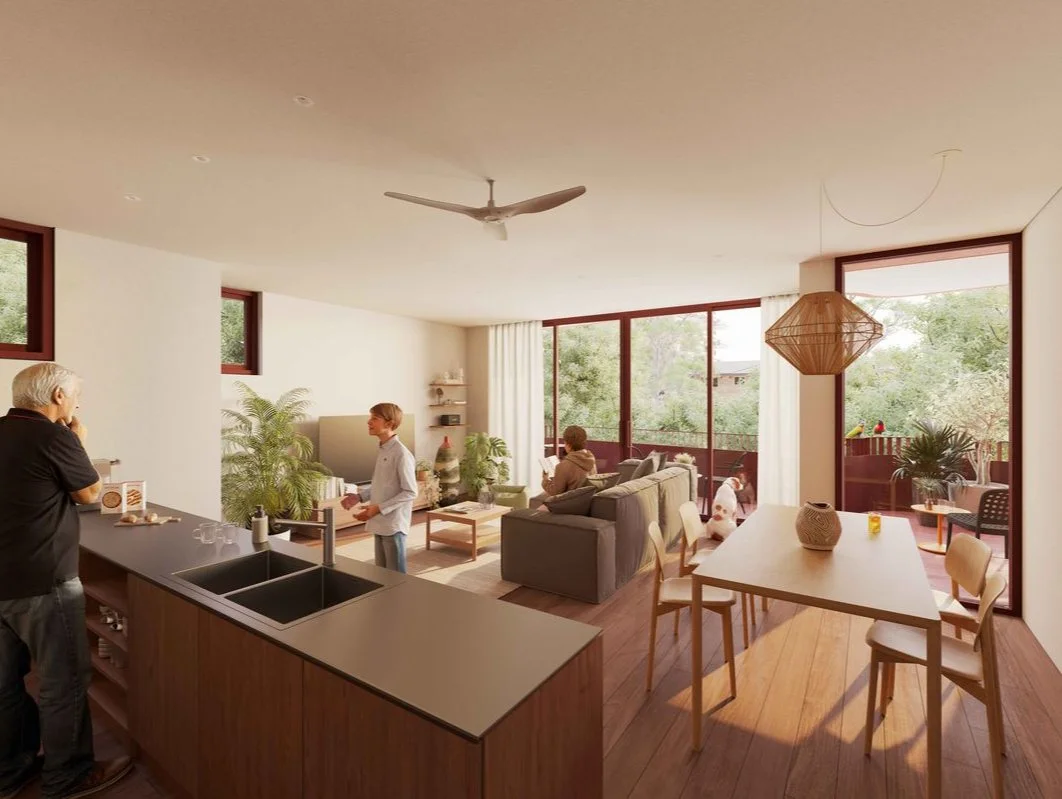
The pattern is climate‑responsive, using passive design strategies such as strategic shading, optimal orientation, and planting to improve comfort and reduce reliance on artificial heating and cooling. Compact footprints minimise material use, while sustainable construction materials deliver durability, thermal performance, and a low carbon footprint. The design meets BASIX standards and achieves the equivalent of a 7‑star NatHERS rating, with optional solar panels and rainwater tanks to further reduce household costs.
The result
A culturally grounded, sustainable, and socially connected housing model that can be delivered quickly, at scale, and to the highest standards — helping to ease NSW’s housing shortage while creating places where people truly want to live.